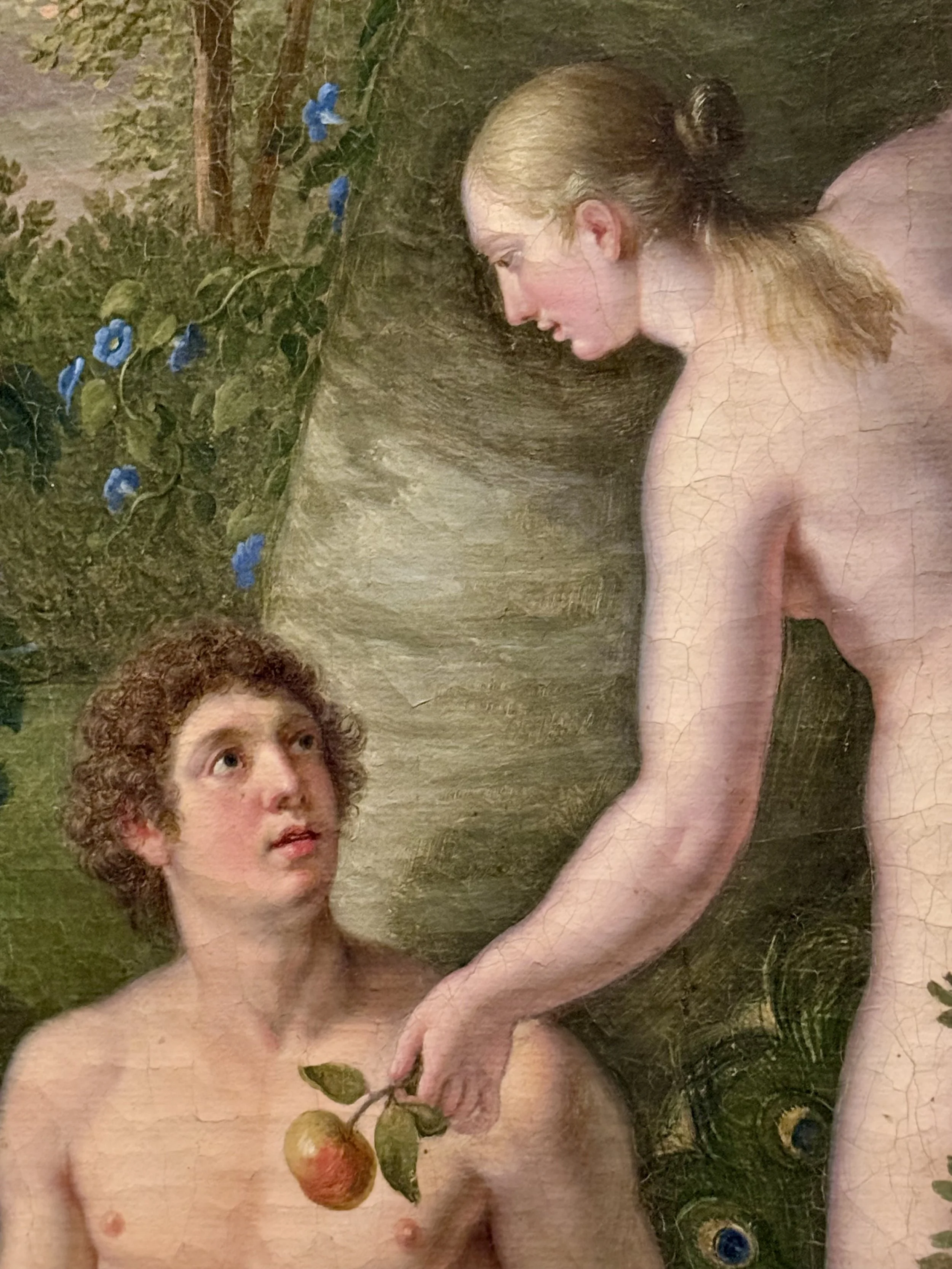
The Story of Salvation—Creation, the Fall & Redemption
The story of salvation, which we profess in the Creed assures us that there is a purpose to life and a reason for our own lives. It tells us that we aren't merely spectators to the passage of time. From the beginning of history when our first parents rebelled against God, through the death and resurrection of His Son, Jesus, God has been writing His plan of salvation. We each have God-given roles to play in that story which continues to unfold, and if we refuse God's loving invitation, the entire world is poorer. The reality is that God's story of love isn't complete without each one of us. What's your role in this great story? Are you ready to accept it? These are some of the important questions we will explore in this week’s session on the story of salvation.

Adam & Eve
In this week’s video, Adam and Eve are frequently mentioned. So what does the Church believe and teach about Adam and Eve? Is their story a real story? Did Eve really pick fruit off a tree and give it to Adam after a snake spoke to her?
The Church teaches that the account of the fall of Adam and Eve in Genesis chapter 3 uses figurative language to affirm a primeval event. It uses images and symbolic language to describe a real event that took place at the beginning of the history of man. (CCC 390) The Church recognises that the stories in the first eleven chapters of the Bible are not fully literal but contain figurative and symbolic elements. That doesn’t mean they contain no history, it means the history recounted is done so in a literary way—in a way congruent with the culture of the age.
In 1950 Pope Pius XII wrote: ‘The first eleven chapters of Genesis, although properly speaking not conforming to the historical method used by the best Greek and Latin writers or by competent authors of our time, do nevertheless pertain to history in a true sense…the same chapters, in simple and metaphorical language adapted to the mentality of a people but little cultured, both state the principal truths which are fundamental for our salvation, and also give a popular description of the origin of the human race and the chosen people (Humani Generis, 38).
So yes, Adam and Eve did exist and by an original sin they broke the communion that existed between God and man. Their lives may not have looked exactly as they are described, but there is truth behind the symbols used in this description. Make no mistake, the inspired author of The Book of Genesis writes with a sophistication that has transcended millennia—something the moderns cannot claim. Anyone who has read Genesis slowly and prayerfully understands why it has stood the test of time.